
Afwa
Things Fall Apart

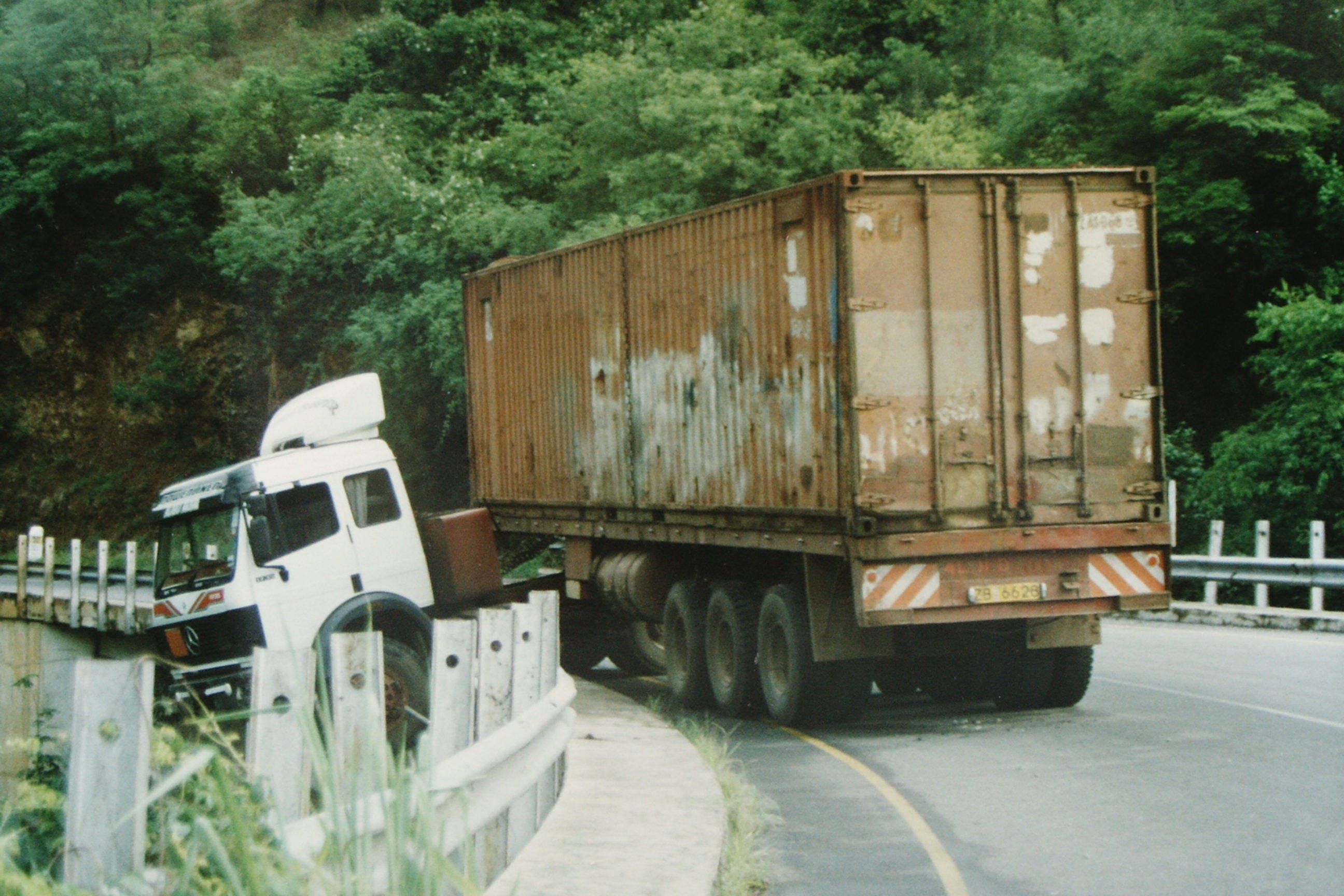
In the beginning there was the word, and the word was “afwa”
When I was as a baby, still in the earliest stages of developing rational thought and speech, I invented a word: “afwa”. I have no idea from what it was derived but its meaning was a mix between “uh oh” and “broken”. I might drop some food on the floor: “Afwa.” An unloved toy might break: “Afwa.” Things might fall apart: “Afwa.”
Shortly before my second birthday, we moved to Africa. The details are a matter for another occasion but in short, I had a fantastic time growing up all over the continent, and later in Papua New Guinea, and learned an awful lot about the world that has stood me in good stead since, but perhaps the most insightful lesson was my first.
Arriving in Tanzania in the late nineties, sat in the car on my very first drive in Africa, I was astonished. A dilapidated shack: “Afwa.” A burned-out car: “Afwa.” Another burned-out car: “Afwa.” Indistinct abandoned machinery: “Afwa.” A crashed lorry in danger of going off a cliff: “Afwa.” This continued for the entire journey.
In fact, it continued for much of the rest of our time traipsing round the tropics. It was not just the poverty; it was the lack of for their surroundings. These were people making the most of what they had, building what they could, and trading their way towards relative prosperity.
Returning to Tanzania after a decade and a half, the country had been transformed. A middle class had emerged, and with them so too had all the trappings of a comfortable and consumerist life, from shopping malls to swimming pools. Nevertheless, there was in the vast urban sprawl of Dar es Salaam much that was broken, much that was squalid, much that was afwa.
Returning to England was always a mixed blessing. The invariably appalling weather at Heathrow was a deeply unpleasant shock to the system, but the first brimmed glass of fresh full-fat milk an excellent restorative treatment. Running around outside in shorts was very much confined to the summer months but the electricity supply seldom if ever faltered. It might have been cold in England, but few things seemed afwa.
I should at this point make a slight disclaimer and reveal that in truth I have no recollection of using the word myself, having soon developed more erudite ways of describing the world I perceived around me, let alone that first car journey, but I have always remembered the lesson of afwa.
Change and decay in all around I see
In the closing minutes of his thirteen-part documentary epic ‘Civilisation’, Kenneth Clark quotes some lines from WB Yeats, whom he said was “more like a man of genius than anyone I’ve ever known,” something I might say of them both.
Things fall apart; the centre cannot hold;
Mere anarchy is loosed upon the world,
The blood-dimmed tide is loosed, and everywhere
The ceremony of innocence is drowned;
The best lack all conviction, while the worst
Are full of passionate intensity.
Those lines from ‘The Second Coming’ were written by Yeats not merely in the aftermath of the First World War, but against the backdrop of ongoing war in Britain itself, as much of Ireland fought to break away. War, violence, and conflict are seen today as being far away from Britain, the curse of less happy lands. Yet terrorism, both Irish and Islamic, and riots have blighted this country on and off for decades. This precious stone set in the silver sea has seen almost 37,000 illegal immigrants cross the Channel in small boats in the last year, almost half the regular strength of the British Army. We are not so far from the blood-dimmed tide as we might like to think.
Over the course of thirteen episodes, without alas a fourteen on Palladian architecture that he himself admitted might have been the best of them all, Clark charted the evolution of Western civilisation from the fall of Rome to the rise of space exploration, but throughout there is a sense of how fragile civilisation can be. Descent into war, poverty, misery, and anarchy is an ever-present danger, no matter how civilised any given people may consider themselves to be.
In the first episode, after his initial statement about being unable to define civilisation in abstract terms but recognising it when he sees it, Clark attempted to summarise why Roman civilisation fell. Suited and perched on some rocks on the riverbank, Clark addressed the camera in front of the Pont du Gard aqueduct, which he praised as “materially beyond the destructive powers of the barbarians” and could certainly not be described as afwa. But Rome itself was, at least in the west. Its rule over the continent was at an end. Nevertheless, the survival, partially or wholly intact, of so much of what the Romans built is testament to their remarkable talent as engineers, building structures that have outlasted them by well over a thousand years.
For centuries after the collapse of the Roman Empire, people who continued to live in its ruins, both physically and metaphorically. Many of the finest buildings of Rome itself, including the Colosseum, were both cannibalised for raw materials and used as makeshift campsites. In Britain, and particularly Wales, people endeavoured to preserve Roman law and order long after the distant metropole had fallen. The survival of so much of classical literature and history is thanks to those monks and scholars, many clinging to the rocks that line Britain’s Atlantic coast, who painstakingly copied them out and ensured their survival as barbarism ravaged the continent. Everything seemed afwa in the afterglow of Rome.
Thankfully, all was not lost. 1066 and all that was followed by the Renaissance, the Enlightenment, the Industrial Revolution, and much else that led to the flourishing of Western civilisation and Britain’s own stint as top nation. This path was not a direct line of inevitable progress; nor was it without wars, setbacks, and suffering. Its culmination in two world wars may have included the British Empire’s finest hour, but also some of its worst. Within a few years almost all its colonial possessions had gained independence. Nevertheless, the sun is yet to formally set on the British Empire, unless the strategically suicidal Chagos Islands deal goes ahead. We too are living in an afterglow.
At this point I could draw all sorts of parallels, make further classical allusions, and point out the extent to which the post-1997 regime inhabits the ruins of what came before but instead seeks to replace its law and order. I will certainly omit any references to any barbarians, at gates or otherwise. Instead, I have a question. When you look at Britain today, from Parliament to the potholes, from Rochester to the roadside rubbish, do things look afwa to you?